Manufacturer: GuangRou
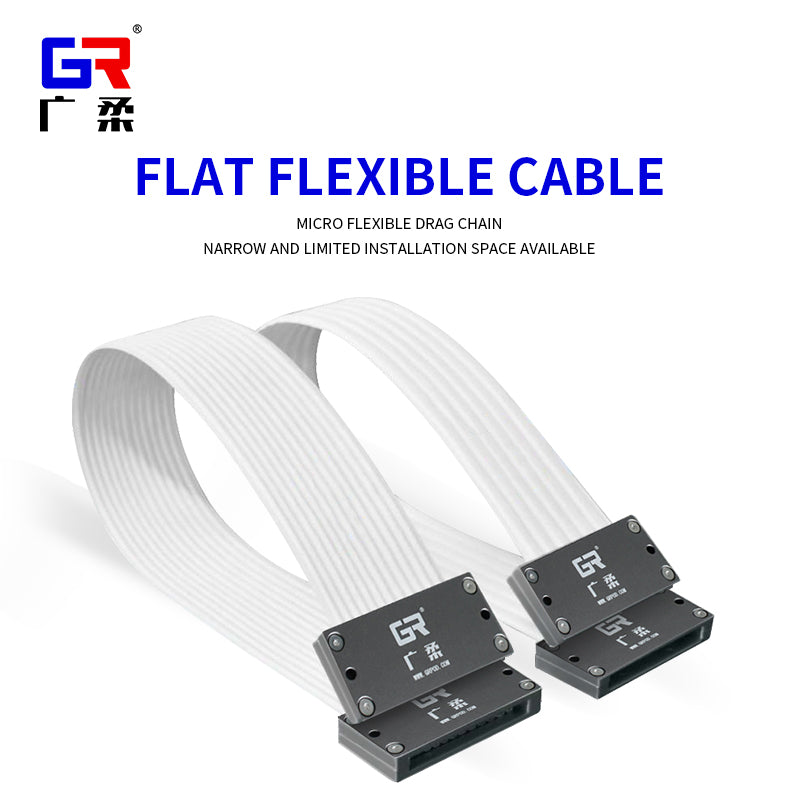
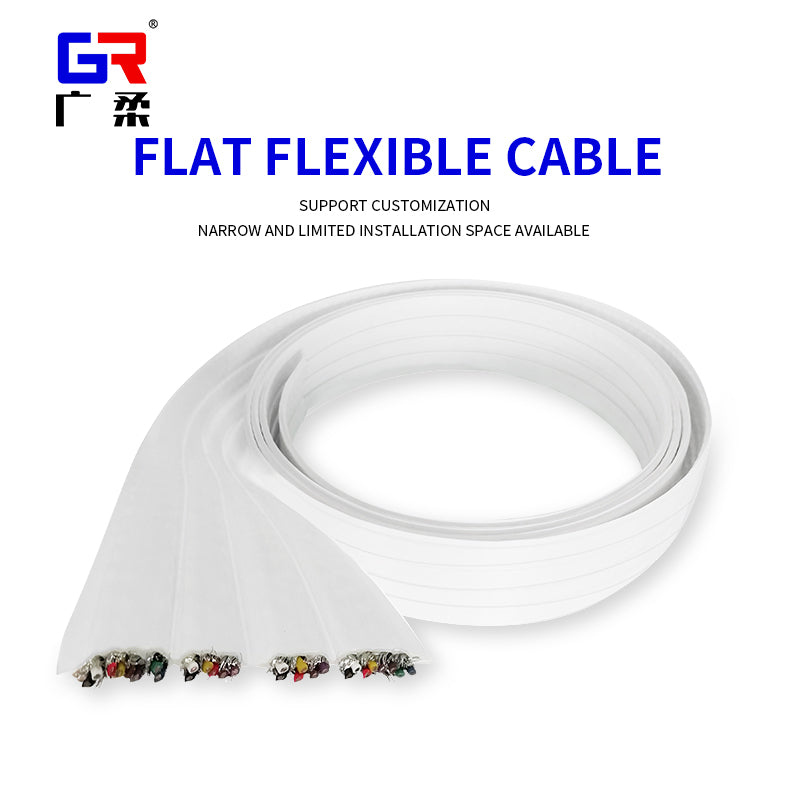
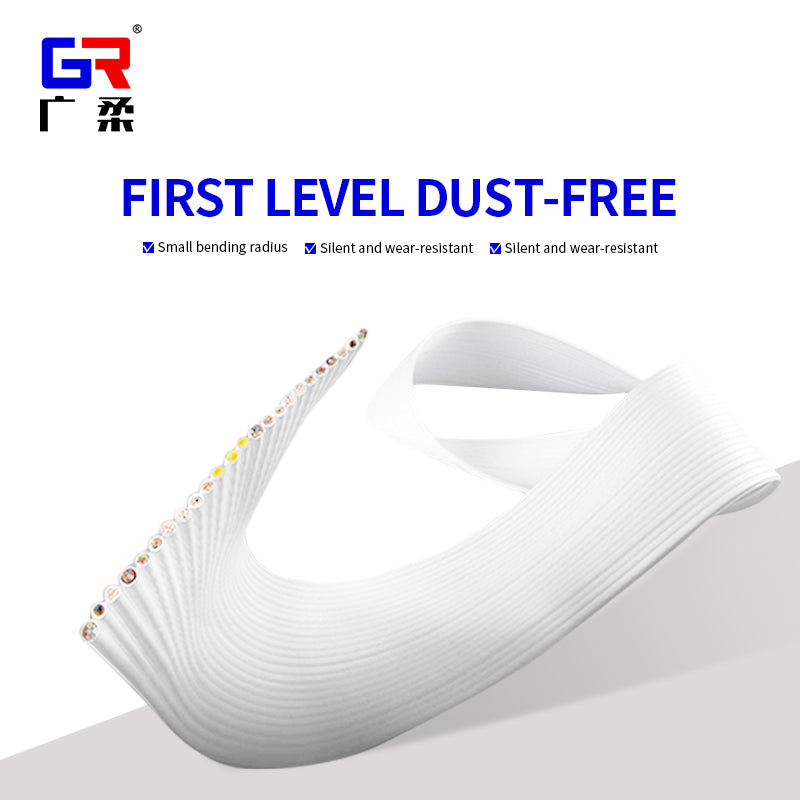
High flexible flat cable with stable bending signal, low friction, dust-free, and quiet sound can replace Gore for easy installation and wear resistance
Let us know what you need
WhatsApp: +86 15915805428
- Flexible flat cables, also known as FFC cables, are thin, flat cables that are commonly used in electronic devices to connect various components. They are made up of multiple thin conductive metal strips, usually copper, sandwiched between layers of insulating material, such as polyester or polyimide.
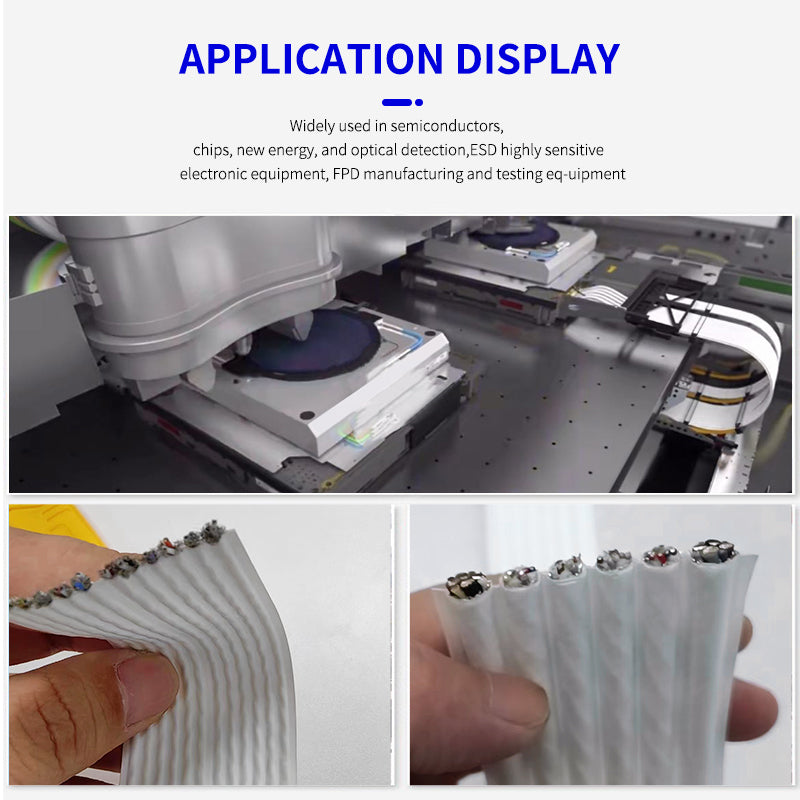
- FFC cables are highly flexible and can be bent or folded without damaging the internal conductive strips. This flexibility makes them ideal for applications where space is limited or where the cable needs to be routed in tight spaces. They are commonly used in devices such as laptops, printers, cameras, and mobile phones.
- FFC cables are also known for their high-speed data transmission capabilities. They can support various communication protocols, such as USB, HDMI, and LVDS, allowing for the transfer of large amounts of data at high speeds.
Introduction to Guangrou Flexible Flat Cable


Guangrou Flat Flexible Cable FAQ
1. What customization options are available for Guangrou flat flexible cables?
Guangrou flat flexible cables can be customized based on actual equipment requirements across multiple dimensions, including: cable name, quantity, structure type, operating current, peak current, operating voltage, power and signal configuration, twisted pair requirement, shielding requirement, and scheme width limitation. Once the customer provides the operating parameters, Guangrou can develop a tailored solution to match the installation space, electrical requirements, and motion conditions of the specific equipment.
2. Why are Guangrou flat flexible cables suitable for cleanroom environments?
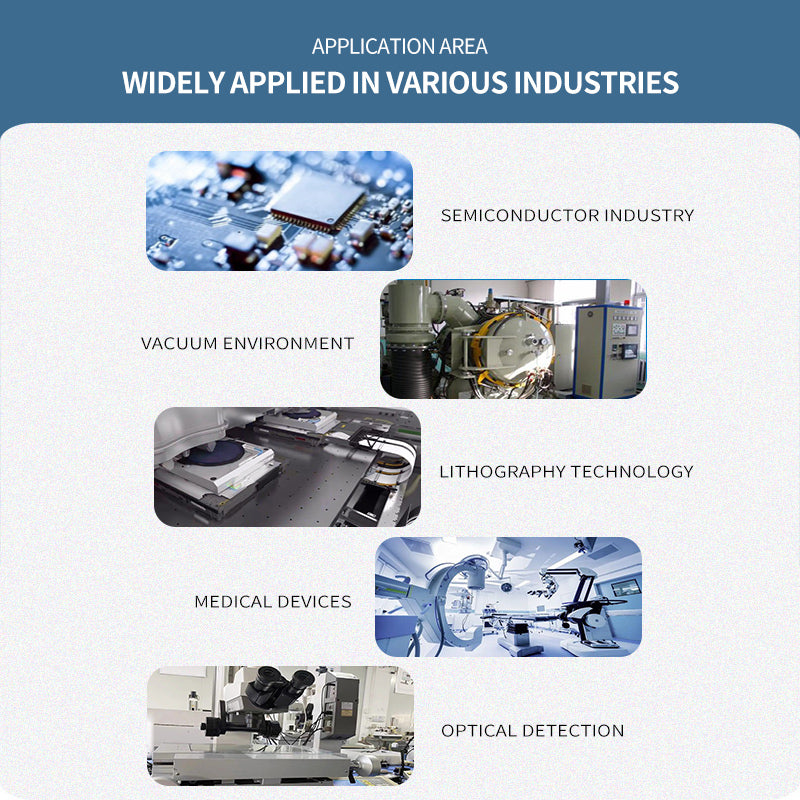
According to available product information, Guangrou flat flexible cables use a PTFE material system, which offers low particle accumulation, low friction, and low outgassing characteristics. They are IPA certified for cleanliness. In applications such as semiconductor manufacturing, 3C panel production, medical cleanrooms, and new energy equipment, the low particle generation properties help reduce contamination risks to products and equipment. During customization, the material and structure can be further adjusted based on specific cleanliness level requirements.
3. What is the bending cycle life and bending radius of Guangrou flat flexible cables?
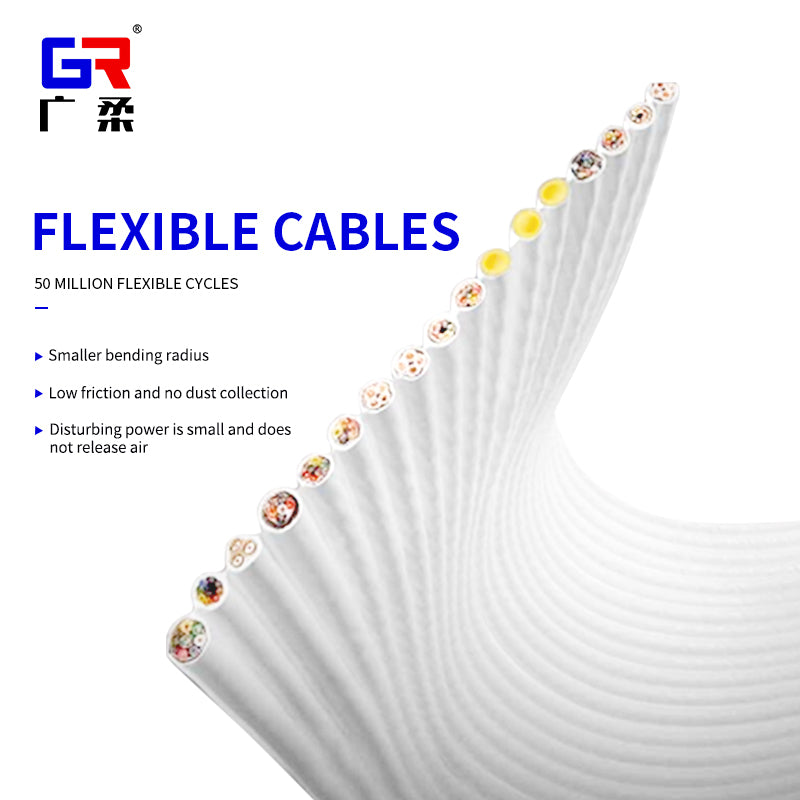
Guangrou flat flexible cables have a stated bending cycle life of over 50 million cycles, with a bending radius as low as 7.5 times the outer diameter of the thickest cable. The flat structure allows the cable to occupy less space during high-frequency reciprocating motion, making it suitable for compact installations and short-travel applications. During customization, the core count, thickness, and bending radius can be adjusted based on actual installation space and motion profile requirements.
4. Can Guangrou flat flexible cables support mixed routing of power and signal lines?
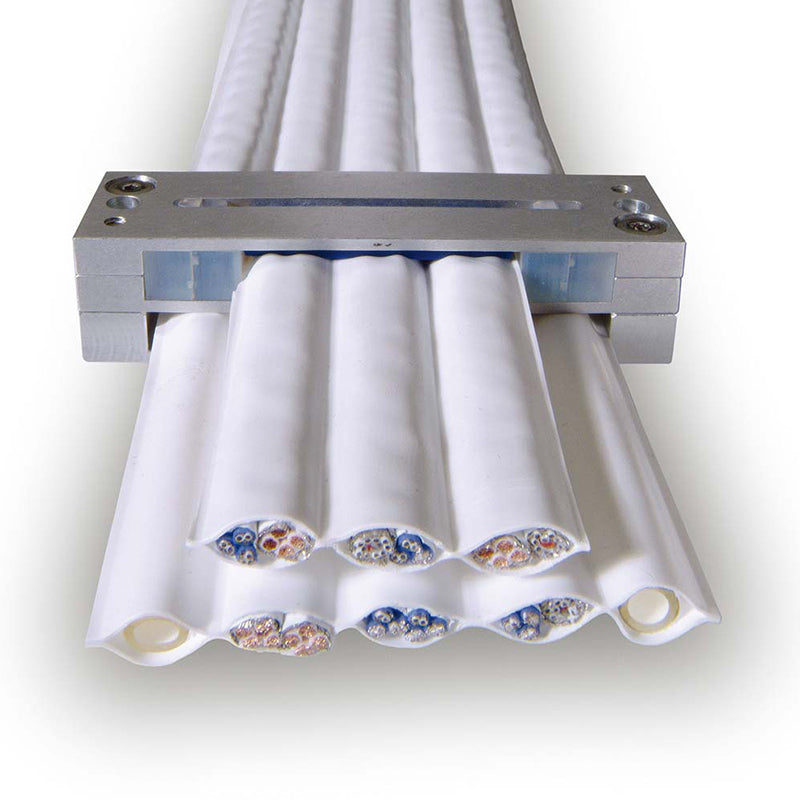
Yes. Guangrou flat flexible cables support single or mixed routing of power cables, signal lines, and air tubes within the same assembly. The core count, arrangement, and shielding configuration can be customized to meet different signal types and transmission requirements. For equipment that requires both power and signal transmission within a limited installation space, a customized hybrid solution is often easier to integrate and route.
5. What parameters are needed when customizing Guangrou flat flexible cables?
When customizing Guangrou flat flexible cables, the following information is typically required:
- Cable name and quantity
- Structure type
- Operating current and peak current
- Operating voltage
- Power and signal configuration requirements
- Twisted pair or shielding requirements
- Scheme width limitation
- Environmental conditions (cleanliness class, temperature, motion profile, etc.)
The more complete the input parameters, the better the customization will match the application, and the more reliable the installation and operation will be.