Key takeaways
- Define particle limits, monitored particle sizes and cleaning conditions before selecting a cleanroom cable moving system. For semiconductor handling or medical-device assembly, request particle measurements during representative movement.
- Assess wear debris at cable contact points and guide surfaces. Test the assembly at the intended travel, speed, acceleration and duty cycle; PTFE film wear resistance alone does not establish cleanroom suitability.
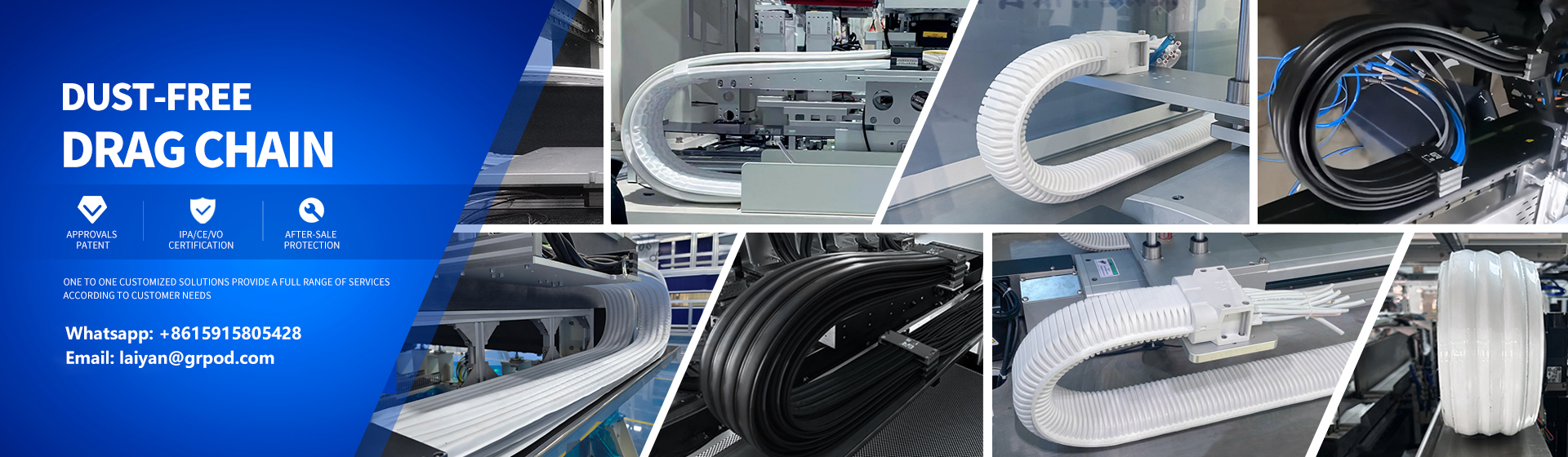
- Compare Guangrou open-type cleanroom drag chains and Guangrou closed-type cleanroom drag chains for cable access, internal clearance and rubbing. A Guangrou Class 100 cleanroom tank chain designation requires supporting test standards and operating conditions.
- Match Guangrou flat cables with Guangrou cleanroom drag chains by checking cable dimensions, dynamic bend radius, flex rating and strain relief. Inspect for edge rubbing and twisting throughout the stroke.
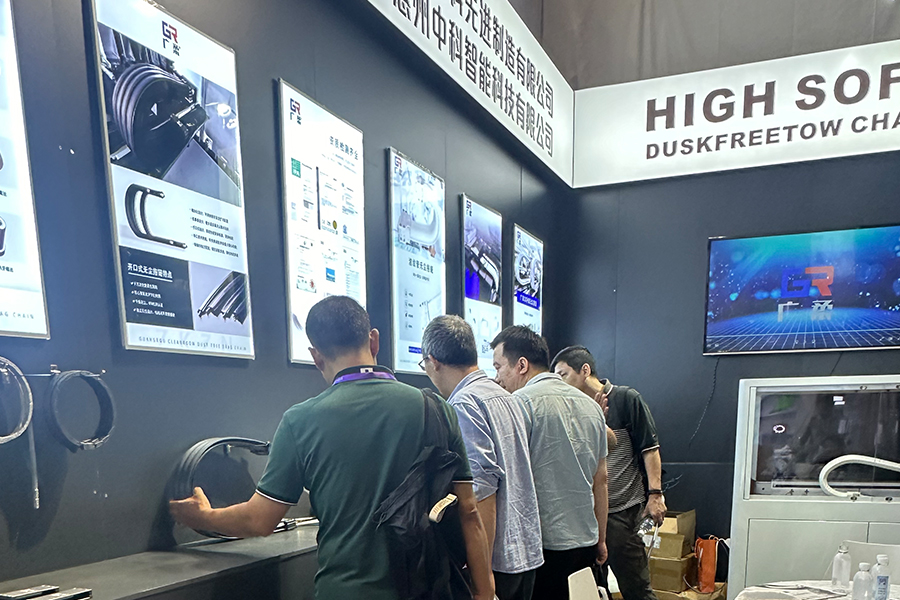
- Huizhou Zhongke Intelligent Technology Co., Ltd. reports core PTFE membrane modification technology and an integrated process covering membrane development, production and drag-chain assembly. Request comparable test evidence for its stated wear-resistance advantage over most competing films, then verify the proposed assembly through endurance and particle testing.
Set cleanroom needs
define the airborne particle limits, monitored particle sizes, and operating conditions before selecting a cleanroom drag chain. A semiconductor process area and a medical device assembly station may need different contamination controls. Specify humidity, cleaning agents, and whether testing must cover cable movement during production.
| Requirement | Selection check |
|---|---|
| Cleanliness target | Request particle measurements under representative operating conditions. |
| Environmental exposure | Confirm compatibility with humidity limits and cleaning chemicals. |
| Installation location | Assess particle release near exposed products and airflow paths. |
For a Guangrou cleanroom cable moving system, compare Guangrou flat cables, open-type cleanroom drag chains, and closed-type cleanroom drag chains against these requirements. Treat a Class 100 cleanroom tank chain designation as a claim requiring clarification of the test standard and conditions.
Ask the drag chain manufacturer or drag chain factory for supporting records. For a guangrou drag chain, request documentation of Huizhou Zhongke Intelligent Technology Co., Ltd.'s stated PTFE membrane modification capabilities and integrated membrane-production-to-chain-assembly process. Claims of better wear resistance than most competing products require comparable test evidence before they inform a cable carrier solution.
Specify operating-state cleanliness requirements first, then assess wear debris under the intended motion profile.
Assess wear debris
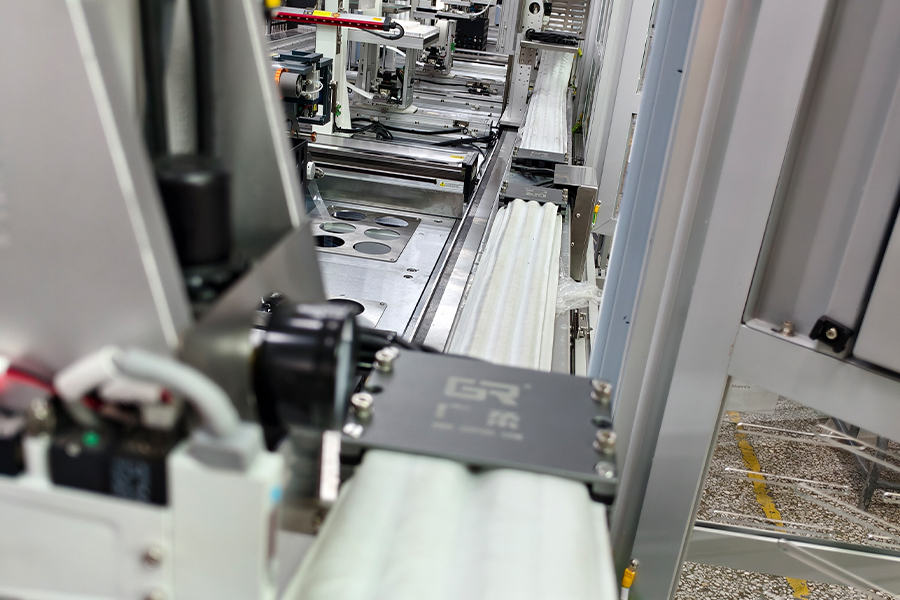
once cleanroom requirements are defined, check where repeated movement creates debris. Cable jackets rubbing against guides, contact between chain components, and trapped particles can increase wear. A cleanroom cable moving system should be evaluated under representative loads, speeds, bend radii, and humidity conditions. Request airborne particle measurements during operation and inspect contact surfaces after endurance testing. Material wear resistance alone does not establish cleanroom suitability.
Guangrou cleanroom drag chains use modified PTFE film technology. Huizhou Zhongke Intelligent Technology Co., Ltd. reports an integrated process covering PTFE film development, production, and drag chain assembly. Its stated wear-resistance advantage over competing films should be checked against comparative test reports using equivalent conditions.
Compare Guangrou open-type cleanroom drag chains and closed-type cleanroom drag chains for their contact points, debris containment, and cleaning access. When pairing either design with Guangrou flat cables, check for edge rubbing and internal sliding throughout the stroke. For Guangrou Class 100 cleanroom tank chains, request documentation identifying the test conditions and classification basis. In semiconductor or medical device equipment, product labels cannot replace particle testing of the assembled cable system.
Match motion needs
define the travel length, speed, acceleration and duty cycle before selecting a cleanroom drag chain. Check the installation orientation and available bend space. Semiconductor handling equipment often uses repeated short strokes, while laboratory automation may require longer travel. Test the cleanroom cable moving system through its actual motion profile, including rapid reversals, because rubbing, vibration and cable migration can increase particle release.
For Guangrou cleanroom drag chains, compare open-type and closed-type configurations against the required movement and maintenance access. Confirm the permitted unsupported span and mounting alignment with the supplier. When evaluating a Guangrou Class 100 cleanroom cable carrier, request particle-test results under comparable operating conditions; the product designation alone does not establish suitability.
Huizhou Zhongke Intelligent Technology Co., Ltd. has PTFE membrane modification capabilities and an integrated process covering membrane development, production and drag-chain assembly. Assess its stated wear-resistance advantages through comparative testing at the intended speed and load. If Guangrou flat cables are specified, verify their dynamic bend radius and flex-life requirements before fixing the chain geometry.
Check cable fit
after confirming the motion requirements, check each cable's outside dimensions, minimum dynamic bend radius and flex rating. The chain's bend radius must accommodate the least flexible cable or hose. Allow clearance for movement without excessive rubbing, and follow the supplier's filling limits. Tight packing can increase friction and particle release in a cleanroom cable moving system.
When pairing Guangrou flat cables with a Guangrou cleanroom drag chain, verify the cable width, thickness and orientation throughout the stroke. Guangrou open-type cleanroom drag chains provide access for cable replacement, while Guangrou closed-type cleanroom drag chains require checks of enclosure clearance and maintenance access. For a Guangrou Class 100 cleanroom tank chain, request particle-test evidence under representative operating conditions; the product designation alone does not establish suitability.
Huizhou Zhongke Intelligent Technology Co., Ltd. describes its capabilities as covering core PTFE film modification, film development and production, and drag-chain assembly. Its stated wear-resistance advantage over many competing films should be checked against comparable test methods. In semiconductor equipment or medical-device assembly, inspect the assembled cable package during repeated motion for rubbing, twisting and strain at the end connections. Film wear resistance cannot compensate for poor cable fit.
Conclusion
select a cleanroom drag chain by matching particle limits, wear behavior, motion requirements and cable fit. Validate the assembled cleanroom cable moving system under representative speeds, loads and bend radii. For semiconductor handling or medical-device assembly, particle measurements during movement provide a stronger selection basis than material specifications alone.
Evaluate Guangrou cleanroom drag chains and Guangrou flat cables as a complete package. Compare Guangrou open-type cleanroom drag chains and Guangrou closed-type cleanroom drag chains for maintenance access, internal clearance and rubbing during travel. A Guangrou Class 100 cleanroom tank chain designation should be supported by a stated test standard and operating conditions.
Huizhou Zhongke Intelligent Technology Co., Ltd. reports core PTFE membrane modification technology and an integrated process covering membrane development, production and drag-chain assembly. These capabilities warrant review when assessing material consistency and manufacturing control. Request comparable test evidence for its stated PTFE membrane wear-resistance advantage over most competing products, then confirm particle performance and cable condition through endurance testing of the proposed assembly.
FAQs
What should I specify before choosing a cleanroom cable moving system?
Define particle limits, monitored particle sizes, travel, speed, acceleration and cleaning conditions. Request testing during representative movement.
Does a Guangrou Class 100 cleanroom tank chain guarantee suitability?
The designation alone does not establish suitability. Request the classification standard, particle measurements and operating conditions, particularly for semiconductor handling or medical-device assembly.
How do Guangrou open-type cleanroom drag chains compare with Guangrou closed-type cleanroom drag chains?
Open-type designs offer cable access. Closed-type designs require checks of enclosure clearance and maintenance access. Compare particle release under the same motion profile.
Can I use Guangrou flat cables with Guangrou cleanroom drag chains?
Confirm cable dimensions, dynamic bend radius and flex rating. Check clearance, edge rubbing and strain relief throughout the stroke.
What PTFE capabilities does Huizhou Zhongke Intelligent Technology Co., Ltd. report?
The company reports core PTFE membrane modification technology and an integrated process covering membrane development, production and drag-chain assembly. Request comparable testing for its claimed wear-resistance advantage over most competing films.
When should I reassess particle performance?
Reassess after changes to cables, load, speed or routing. Inspect wear surfaces and measure airborne particles during operation; material wear resistance alone cannot establish assembled-system cleanliness.
Contact Guangrou for a clean room drag chain solution.